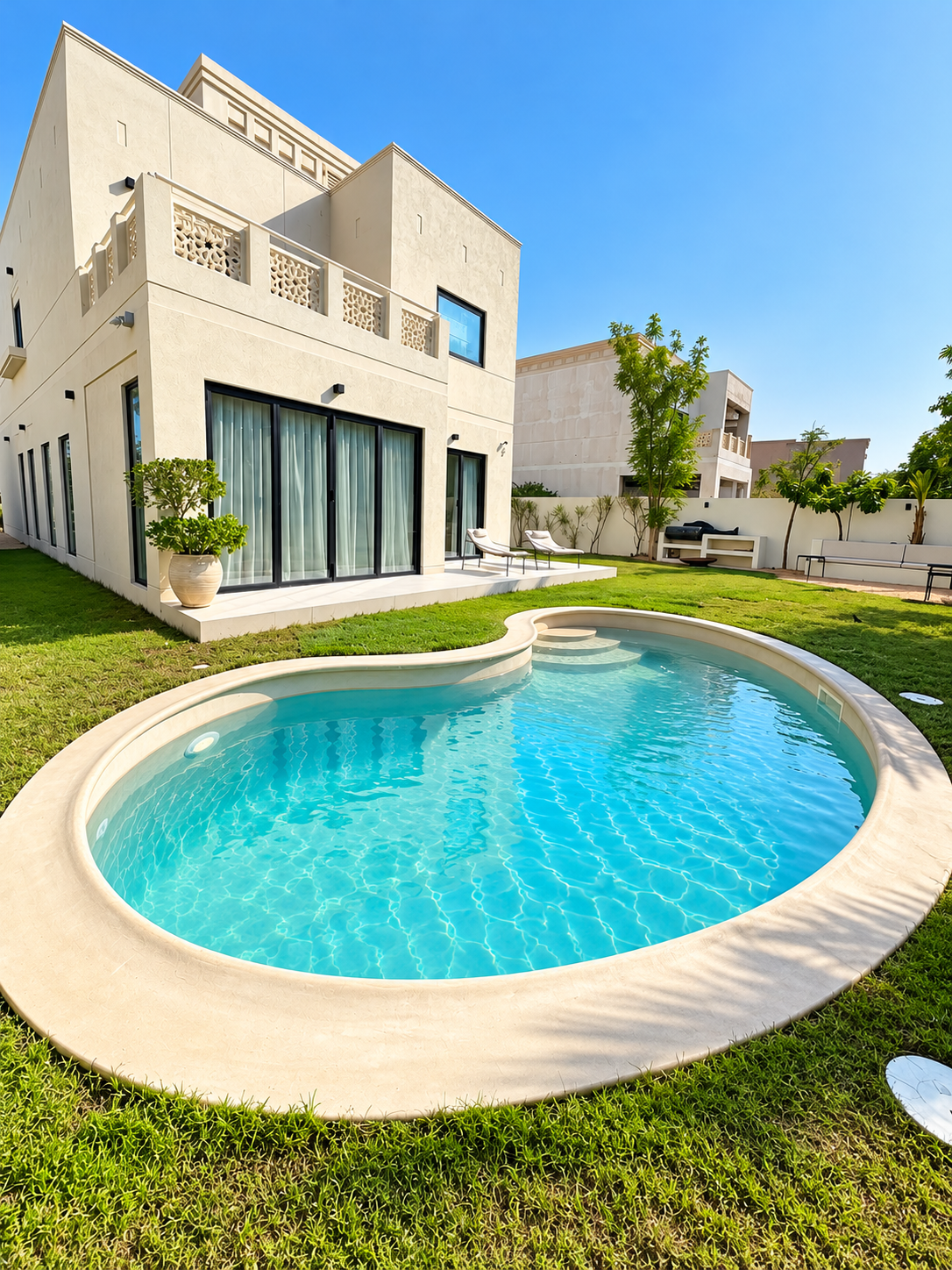
Microtopping in the UAE: Resurface, Don’t Demolish!!
When a floor starts to look tired, most property owners in the UAE assume the only answer is to break it out and start again. That means weeks of noise, dust, skip trucks and a bill that grows with every surprise found under the old surface.
Microtopping offers a smarter route: resurfacing. Applied in a thin layer over a properly prepared surface, it gives floors, walls and counters a completely new look without demolition.
At Good Hand Stones & Concrete Flooring LLC, microtopping is one of our most requested finishes. In this guide we explain how it works, where it performs best, and what to check before you commit.
What Is Microtopping (Microcement)?
Microtopping, also called microcement, is a thin, cement-based decorative coating. It is applied by hand in several layers, then sealed to protect it. The result is a continuous surface with no grout lines and a soft, hand-finished look.
In the UAE the two names are used for the same family of finish. When you compare quotations, ask about the system, the number of coats and the sealer rather than relying on the name alone.
Because the layer is only a few millimeters thick, it adds almost no height and very little weight. That is what makes resurfacing possible.
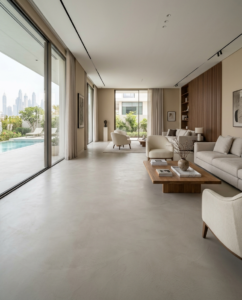
Why Resurface Instead of Demolish?
- Less disruption: no heavy breaking out, so homes and businesses keep running.
- Faster turnaround: applying a thin system is quicker than lifting and relaying.
- Less waste: old tiles and slabs stay in place instead of going to landfill.
- Design freedom: colour, tone and texture can be changed completely.
- Better value: you pay for a new surface, not for a rebuild.
Where Microtopping Works Best
- Living rooms, hallways and open-plan apartments
- Bathrooms, shower areas and vanities
- Kitchen counters, islands and splash backs
- Feature walls and staircases
- Retail, showroom, café and hospitality interiors
Many of these spaces were originally tiled. In many cases, microtopping can go over existing tiles once the substrate has been inspected, cleaned and primed. Removing the old tiles is often unnecessary.

How the Microtopping Process Works
- Site inspection: we check the existing surface for soundness, loose or hollow tiles, cracks and moisture.
- Preparation: the surface is cleaned, repaired and profiled so the new layers bond properly.
- Primer: a bonding primer is applied to the prepared surface.
- Base coats: microtopping is applied by hand in thin layers, with reinforcement where needed.
- Finish coats: the final layers set the colour and texture, from smooth and satin to subtly cloudy.
- Sealing: a protective sealer is applied for water, stain and wear resistance.
For our clients at GH Interiors, we have used microtopping to give floors, walls and feature areas a continuous, joint-free finish. Having our decorative concrete team and our interior designers under one group means the finish is planned together with the rest of the design.
Honest Limits: When Microtopping Is Not the Answer
- Failing substrate: if the floor underneath is moving, cracking structurally or damp, it must be fixed first.
- Heavy vehicle traffic: for driveways and heavy-use outdoor areas, other systems such as stamped concrete or exposed aggregate are the better fit.
- Wet areas: bathrooms and showers need correct waterproofing and sealing behind the finish.
Telling you this upfront is part of how we work. We would rather recommend the right system than sell the wrong one.
Frequently Asked Questions
Is microtopping the same as microcement? In the UAE the two terms are generally used for the same type of thin, cement-based decorative finish.
Can microtopping be applied over existing tiles? In many cases, yes. The tiles must be firmly bonded, and the surface needs proper preparation and priming. A site inspection will confirm.
Is microtopping suitable for bathrooms? Yes, when the substrate is properly waterproofed and the finish is correctly sealed.
How long does installation take? It depends on the area, the number of coats and drying time between layers. We will give a timeline after the site inspection.
How do I get a quote? Send us photos and measurements, or book a site visit, and we will recommend the right system.
Ready to Resurface?
Visit our showroom at Al Falasi Building, Salah Al Din St, Dubai, or contact us:
- Phone: +971 56 1998402 / +971 4 2622888
- Website: goodhandpro.com
Tell us which room you want to transform, and we will show you how to do it without starting from scratch.
 Previous Post