
Stamped Concrete in Dubai: Beneath the Pattern Lies the Strength
Stamped concrete in Dubaiis a durable and attractive surface solution designed to withstand everyday use and demanding UAE conditions. Understanding stamped concrete layers is important if you want a durable, attractive surface that stands up to everyday use and UAE conditions. What you see on the surface is only part of the installation—several carefully prepared layers underneath help support the finished stamped concrete.
At Good Hand Stones and Concrete Flooring, we’ve installed stamped concrete in Dubai across villas and commercial properties, and one thing is always true: a stunning finish is only as good as the foundation beneath it. Here’s a breakdown of every layer that goes into a properly built stamped concrete surface, from the ground up.
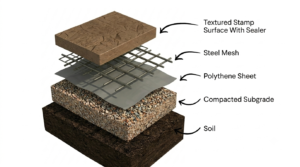
These stamped concrete layers work together to create a strong and durable finished surface.
1. Soil
Everything starts with the native soil. Before any construction begins, the existing ground is assessed for stability, drainage, and load-bearing capacity. In the UAE, soil conditions can vary significantly depending on the site — sandy, loose, or expansive soils all behave differently under load. Skipping proper soil assessment is one of the most common reasons decorative concrete surfaces crack or sink over time.
2. Compacted sub-grade
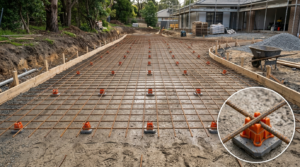
On top of the natural soil, a layer of compacted aggregate (crushed stone or gravel) is laid and mechanically compacted. This sub-grade layer does two critical jobs: it creates a stable, even base for everything above it, and it improves drainage so water doesn’t pool beneath the slab. A poorly compacted sub-grade is one of the leading causes of uneven settling and surface cracking down the line — no amount of surface sealing can fix a problem that starts here.
3. Polythene Sheet (Vapor Barrier)
A polythene sheet is placed over the compacted sub-grade before concrete is poured. This acts as a moisture barrier, preventing ground moisture from migrating up into the concrete slab. For pool decks, villa driveways, and outdoor patios in the UAE’s climate, controlling moisture transfer is essential — it helps prevent efflorescence (that chalky white staining), reduces the risk of surface blistering, and protects the long-term integrity of the finish.
4. Steel Mesh Reinforcement
Concrete is strong under compression but weak under tension, which is where steel mesh reinforcement comes in. A grid of steel rebar or mesh is laid within the slab to give it tensile strength, helping the concrete resist cracking from ground movement, thermal expansion, and everyday loads — whether that’s vehicle traffic on a driveway or foot traffic around a pool. This layer is completely invisible in the finished product, but it’s what keeps a stamped concrete surface structurally sound for years.
5. Textured Stamp Surface With Sealer
Finally, the layer everyone sees: the concrete is poured, color is integrated (through integral color, color hardener, or a combination of both), and while it’s still workable, stamping mats are pressed into the surface to create the desired texture — whether that’s natural stone, wood plank, cobblestone, or a custom pattern. Once cured, a high-quality sealer is applied to protect the surface from UV exposure, moisture, and wear, while also enhancing the color and giving it that polished, finished look.Understanding these stamped concrete layers can help you make better decisions when planning a new driveway, patio, pool deck, or other concrete surface.
Stamped Concrete Dubai: Why This Matters When Choosing a Contractor
A lot of the visual difference between stamped concrete installations comes down to color choice and stamp pattern — but the difference in how long it lasts comes down to the four layers you never see. When you’re evaluating a decorative concrete contractor, it’s worth asking:
- How is the sub-grade prepared and compacted?
- Is a vapor barrier used, especially for pool decks and ground-level slabs?
- What reinforcement is used, and is it appropriate for the expected load?
- What sealer system is used, and how often does it need reapplication in UAE conditions?
A contractor who can answer these questions in detail is one who understands that stamped concrete is a system, not just a surface finish.
Built to Last From the Ground Up
At Good Hand Stones and Concrete Flooring, every stamped concrete project — whether it’s a villa driveway, a pool deck, or a commercial courtyard — starts with proper sub-grade preparation and moisture protection, is reinforced for long-term durability, and finishes with expert stamping, coloring, and sealing tailored to Dubai and Abu Dhabi’s climate.
If you’re planning a stamped concrete project and want it done right from the soil up, get in touch with our team for a consultation
Follow us on Instagram @Goodhandscf for daily project updates, or visit our showroom on Salah Al Din Street, Dubai to see all three finishes in person.
Explore Our Interior Design Division: Click Here
 Previous Post
 Next Post