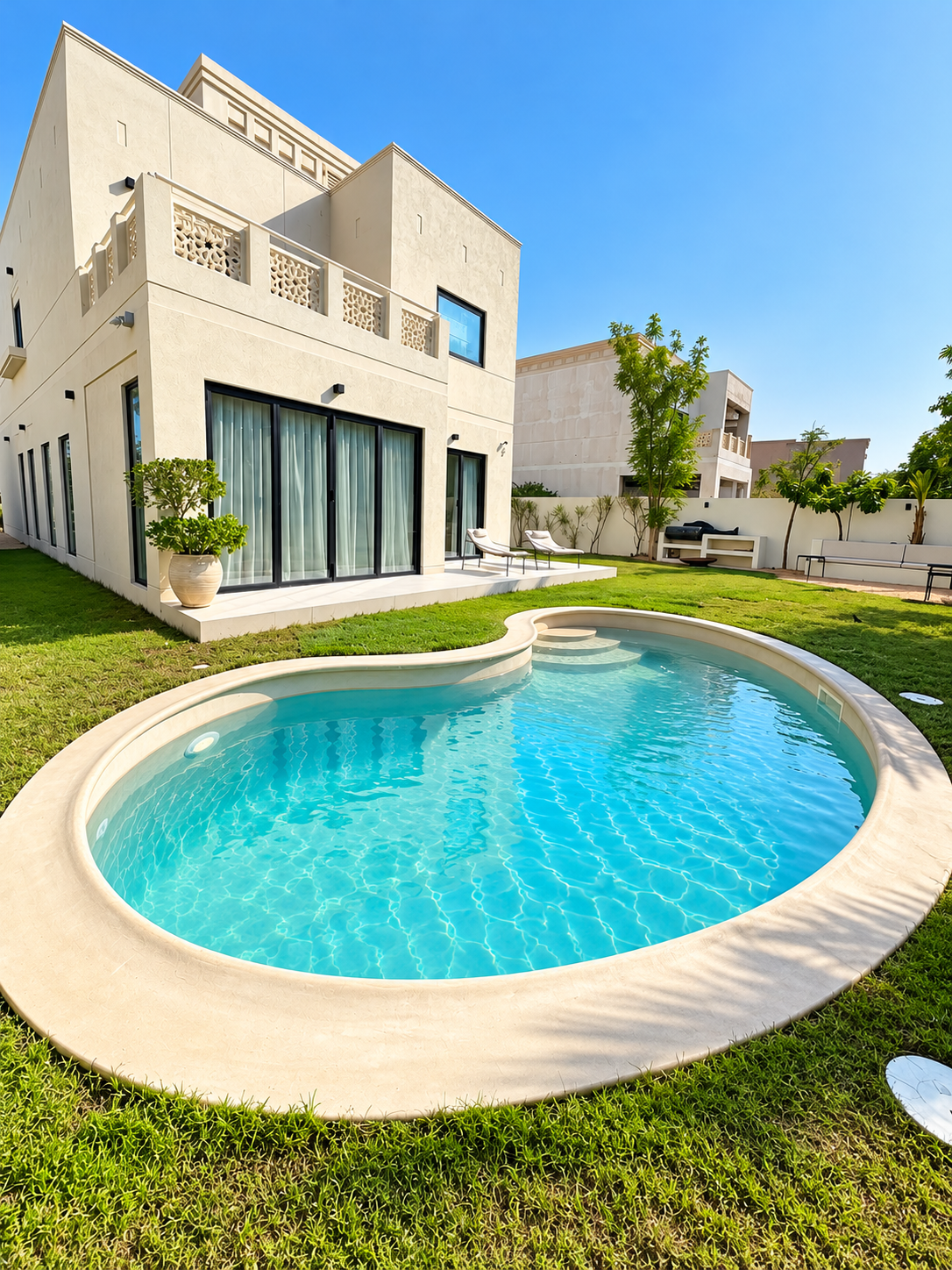
Pool Render vs Tiles: Which Is More Durable?
When designing or renovating a swimming pool, choosing the right interior finish is one of the most important decisions for long-term performance and durability. Two of the most common options are pool render and pool tiles. While both provide a functional and aesthetic finish, their durability, maintenance, and cost implications differ significantly.
For villa owners, property developers, and contractors in regions like the UAE where pools are exposed to extreme temperatures, understanding which option lasts longer is essential. This guide explores the key differences between pool render and tiles to help you determine the best finish for long-term durability.
Understanding Pool Render
Pool render is a cementitious or polymer-modified coating applied directly to the concrete shell of a swimming pool. It creates a smooth, waterproof base layer that prepares the pool for final finishing such as paint, quartz coating, or pebble finishes.
A high-quality pool render system includes:
- Surface preparation and crack repair
- Waterproof render application
- Smooth leveling and curing
- Protective top coating or finish
Modern render systems are designed to withstand water pressure, chemical exposure, and temperature fluctuations, making them highly durable when applied professionally.
Understanding Pool Tiles
Pool tiles are ceramic, porcelain, or glass tiles installed over a rendered base using waterproof adhesives and grout. They are widely used for decorative purposes and are often chosen for luxury or aesthetic-focused projects.
Tiles offer:
- Decorative and customizable designs
- Smooth and glossy finish
- Easy cleaning surface
- High-end visual appeal
However, tile installations require multiple layers including render, adhesive, tile fixing, and grout sealing, making the system more complex.
Durability Comparison: Pool Render vs Tiles
1. Structural Strength and Flexibility
Pool Render:
A professionally applied pool render becomes part of the pool structure. It bonds directly to the concrete shell, creating a strong and unified surface. Modern polymer-modified renders offer flexibility, which helps prevent cracking due to structural movement or temperature changes.
Tiles:
Tiles are fixed on top of a rendered base using adhesive and grout. While tiles themselves can be strong, they rely heavily on the quality of installation. Any movement in the pool structure may cause tiles or grout lines to crack or detach over time.
Winner for durability: Pool render
It integrates with the structure and has fewer failure points.
2. Resistance to UAE Weather Conditions
In regions like Dubai and across the UAE, swimming pools face extreme heat, UV exposure, and temperature fluctuations.
Pool Render:
High-quality pool render systems are designed to handle thermal expansion and contraction. They resist cracking when properly cured and coated with waterproof sealers.
Tiles:
Tiles exposed to intense heat can expand and contract. Over time, this can weaken grout lines and adhesive layers, leading to tile popping or loosening — a common issue in outdoor pools.
Winner for durability: Pool render
It performs better under extreme weather conditions with less risk of surface failure.
3. Waterproofing Performance
Waterproofing is critical to prevent leakage and structural damage.
Pool Render:
Waterproof pool render systems act as a protective barrier that prevents water seepage. Advanced render systems include waterproof additives and sealers, ensuring long-term protection.
Tiles:
Tiles themselves are water-resistant but not fully waterproof. Water can penetrate through grout lines and joints if not properly sealed or maintained. Over time, this can cause hidden leakage and damage beneath the tile surface.
Winner for durability: Pool render
It provides more reliable and consistent waterproofing.
4. Maintenance and Repairs
Pool Render:
Pool render surfaces require minimal maintenance when sealed properly. If minor cracks or wear occur, repairs can be done by patching and re-coating specific areas without major disruption.
Tiles:
Tiles require regular inspection of grout lines and joints. Damaged tiles must be individually removed and replaced, which can be time-consuming and costly. Grout discoloration and algae buildup also require periodic cleaning.
Winner for durability and ease: Pool render
It is easier and more cost-effective to maintain over time.
5. Longevity and Life Expectancy
A well-installed pool finish should last for many years without major repairs.
Pool Render:
A high-quality pool render system can last 10–15 years or more with proper coating and maintenance. Re-coating the surface periodically can extend its lifespan significantly.
Tiles:
Tile finishes can also last long if maintained properly, but grout and adhesive layers typically require repairs every few years. In harsh climates, tile replacement may be needed sooner.
Winner for long-term durability: Pool render
It generally offers longer uninterrupted performance.
6. Cost vs Long-Term Value
Initial Cost:
Tiles are usually more expensive due to material and labor costs. Premium tiles and installation can significantly increase project budgets.
Pool render systems are more cost-effective initially.
Long-Term Cost:
Tile repairs, regrouting, and replacements increase long-term maintenance costs.
Pool render systems require less frequent repairs and are more economical over time.
Best value: Pool render
It offers better long-term return on investment.
When Tiles May Be Preferred
Despite the durability advantages, tiles may still be chosen for specific reasons:
- Luxury aesthetic appeal
- Decorative patterns or mosaic designs
- High-end residential or hotel projects
- Feature walls or pool borders
In many modern pools, tiles are used selectively while the main pool surface uses pool render or quartz finishes for durability.
Choosing the Right Finish for Your Pool
The decision between pool render and tiles should be based on:
- Project budget
- Climate conditions
- Maintenance expectations
- Aesthetic requirements
- Long-term durability goals
For residential villas and outdoor pools in the UAE, a professional waterproof pool render system is often the most durable and cost-effective solution. It ensures structural protection, minimizes leakage risks, and withstands harsh environmental conditions.
Conclusion
Both pool render and tiles have their advantages, but when it comes to long-term durability, pool render clearly stands out. It provides superior waterproofing, structural bonding, and resistance to extreme weather conditions while requiring less maintenance over time.
Tiles offer aesthetic appeal and design flexibility, but they come with higher maintenance and repair risks, especially in outdoor environments.
For property owners and developers seeking a long-lasting, reliable, and cost-effective pool finish, investing in a high-quality pool render system installed by professionals is the smarter choice. A well-rendered pool not only enhances durability but also ensures a safe, leak-free, and visually appealing swimming environment for years to come.
Explore Our Interior Design Division: Click Here
 Previous Post